Simple explanations behind water, smoke, mold, moisture, documentation, and doing the job right.
Where did all that water go?
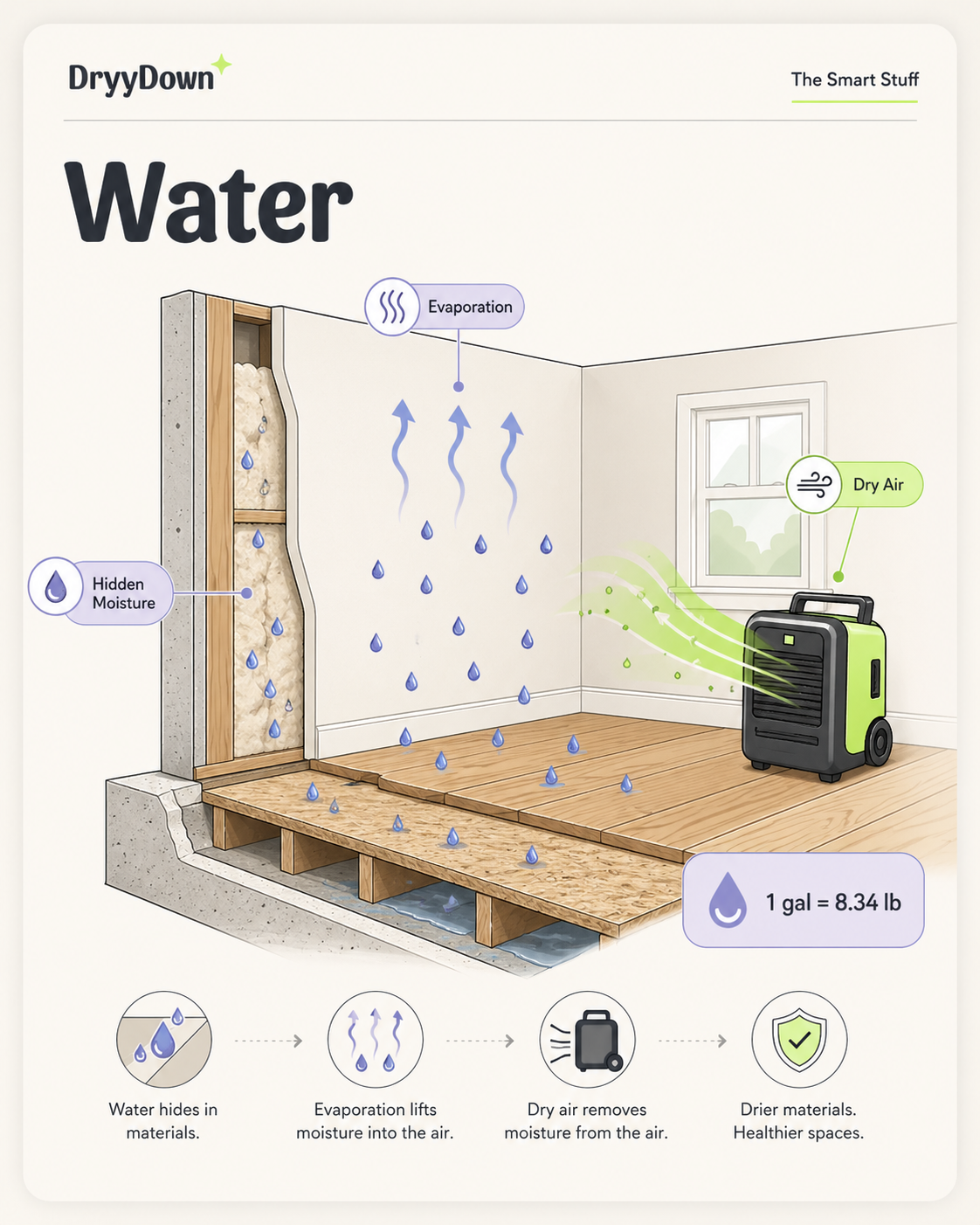
A small water loss is not always small. Water spreads into carpet pad, drywall, trim, subfloors, insulation, cabinets, and wall cavities. By the time the surface looks “mostly dry,” moisture may still be sitting inside the building materials.
One gallon of water weighs about 8.34 pounds.
So even a few gallons trapped in flooring, carpet pad, drywall, or cavities can add up fast.
One gallon of water weighs more than 8 pounds. Now imagine that water spread into carpet pad, drywall, wood framing, baseboards, and hidden cavities. That is why “it looks dry” and “it is dry” are not the same thing.
Why do I need to dry the building if the water is gone?
Because extraction removes the obvious water, but not always the hidden moisture. Building materials can hold water below the surface, and that moisture has to evaporate into the air before it can be removed by drying equipment.
Drying is not just blowing air around. It is managing evaporation, humidity, temperature, airflow, and material moisture until the building reaches an acceptable dry condition.
Mold is usually a moisture story.
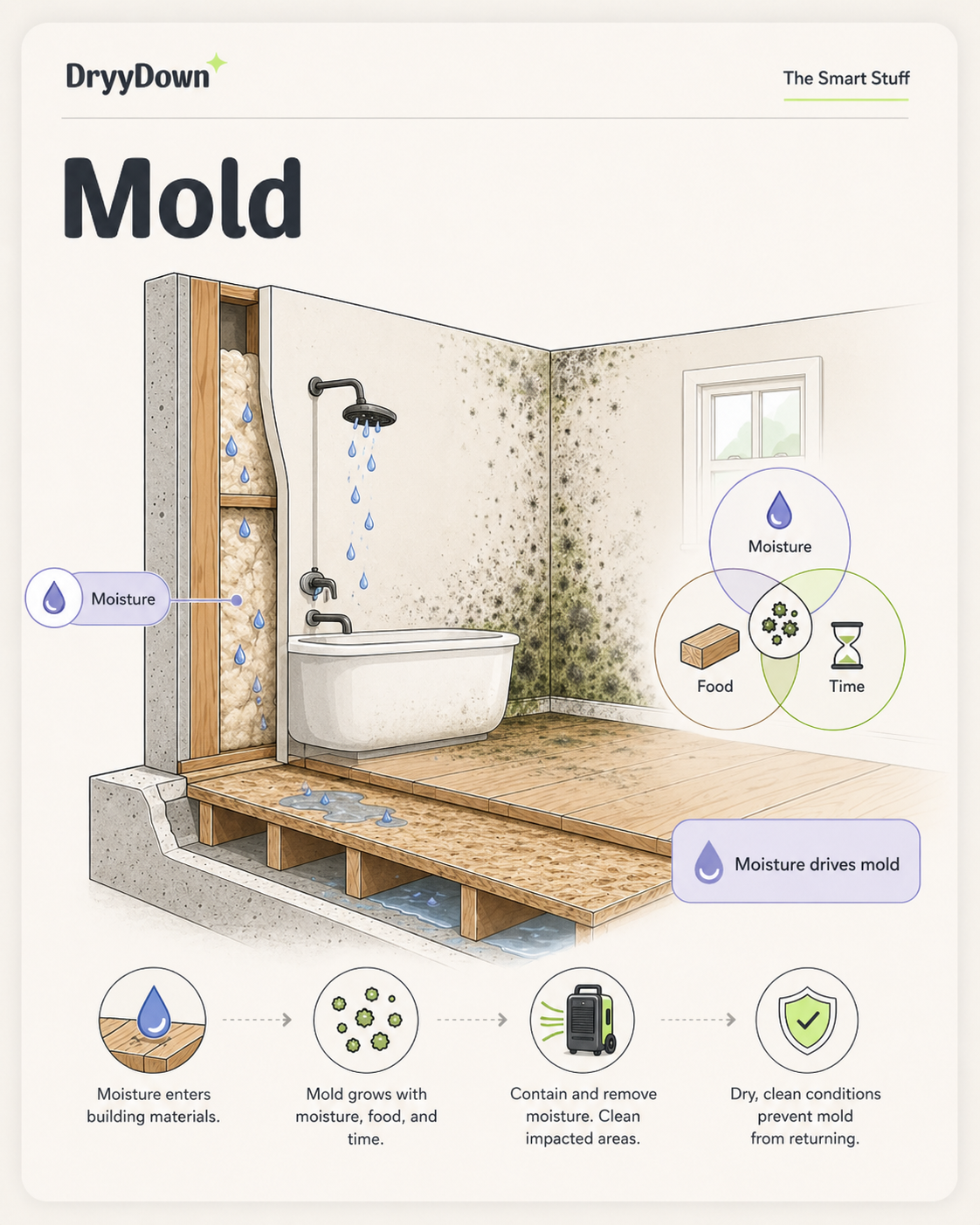
Mold is often treated like a stain problem, but it is really a moisture-control problem. If the moisture source is not found and corrected, cleaning alone may not solve the issue.
Mold needs moisture, a food source, and time.
So even a few gallons trapped in flooring, carpet pad, drywall, or cavities can add up fast.
Mold does not need a dramatic flood to become a problem. Sometimes all it needs is a small leak, poor drying, trapped humidity, and enough time to get comfortable.
Can I just clean mold with bleach?
Almost never, and most often that is not the right answer. The bigger question is: why is the material supporting mold growth in the first place?
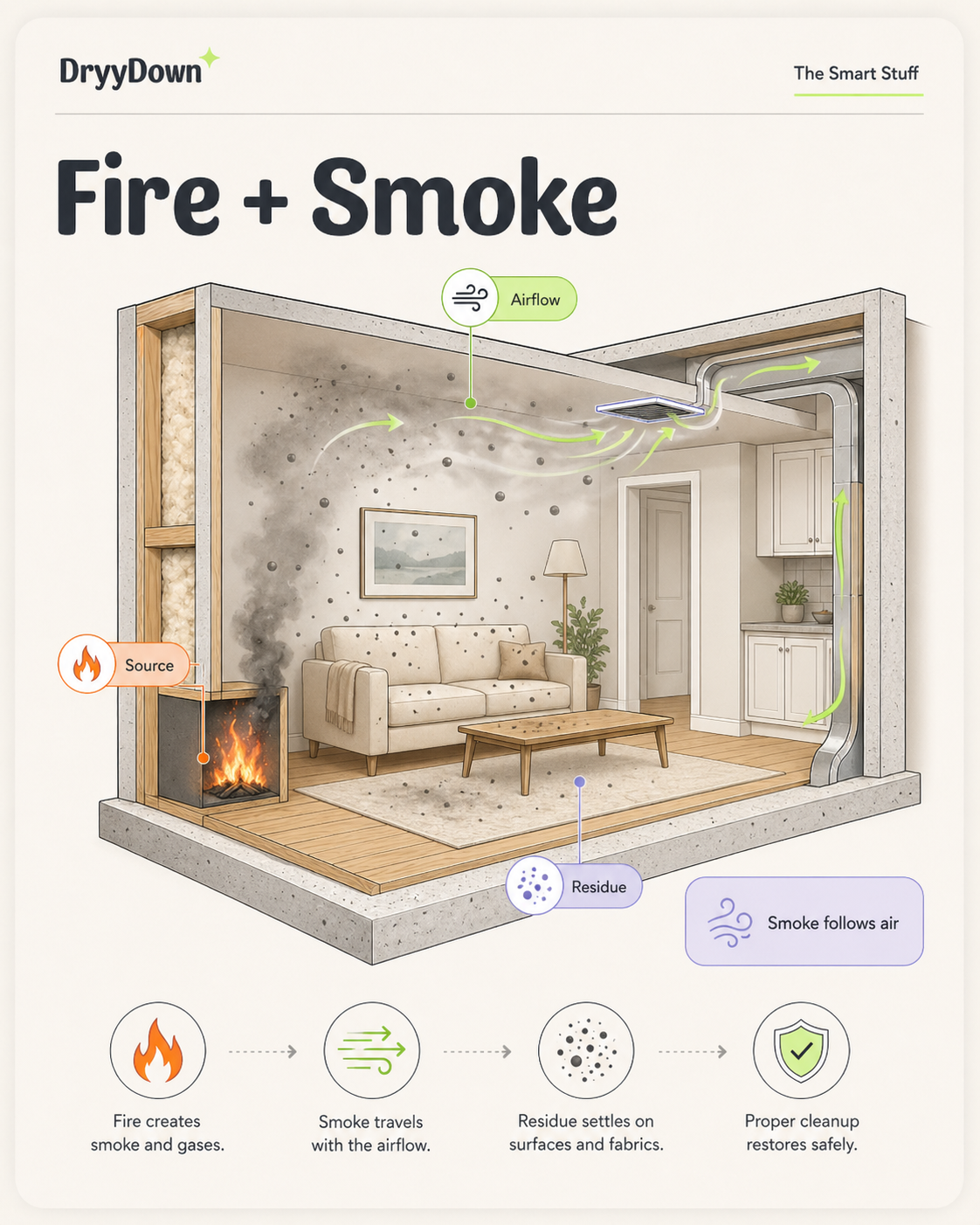
Smoke travels and residues matter.
Smoke is sneaky. It moves with air currents, pressure changes, HVAC systems, and building openings. The visible soot may only be part of the story.
Smoke damage is not just “dirty walls.”
Smoke can leave different types of residues depending on what burned, how hot it burned, and how long the materials were exposed.
Fire damage is the obvious part. Smoke is the part that likes to travel, settle, hide, and remind you it was there every time the air moves.
Why does smoke odor come back after cleaning?
Because odor is often tied to residue, source material, and air movement. If smoke particles or odor sources remain in porous materials, cavities, contents, or HVAC pathways, the smell can return even after surface cleaning.